Order one custom foam insert for every case, drawer or box you run today, then add spares for wear, damage and growth. At Customized Foam Inserts the minimum order is 12 foam inserts, so a small crew can start right-sized, approve a free mockup within 24 hours, and reorder the same saved layout whenever the fleet grows.
- Minimum order is 12 foam inserts per run
- Free layout mockup within 24 hours, with unlimited free revisions
- Standard turnaround is about 2 weeks; faster turnaround is available with express shipping
- Approved layouts can be reordered later so new kits match the originals
- You pay nothing until you approve the design
How do I count how many foam inserts I actually need?
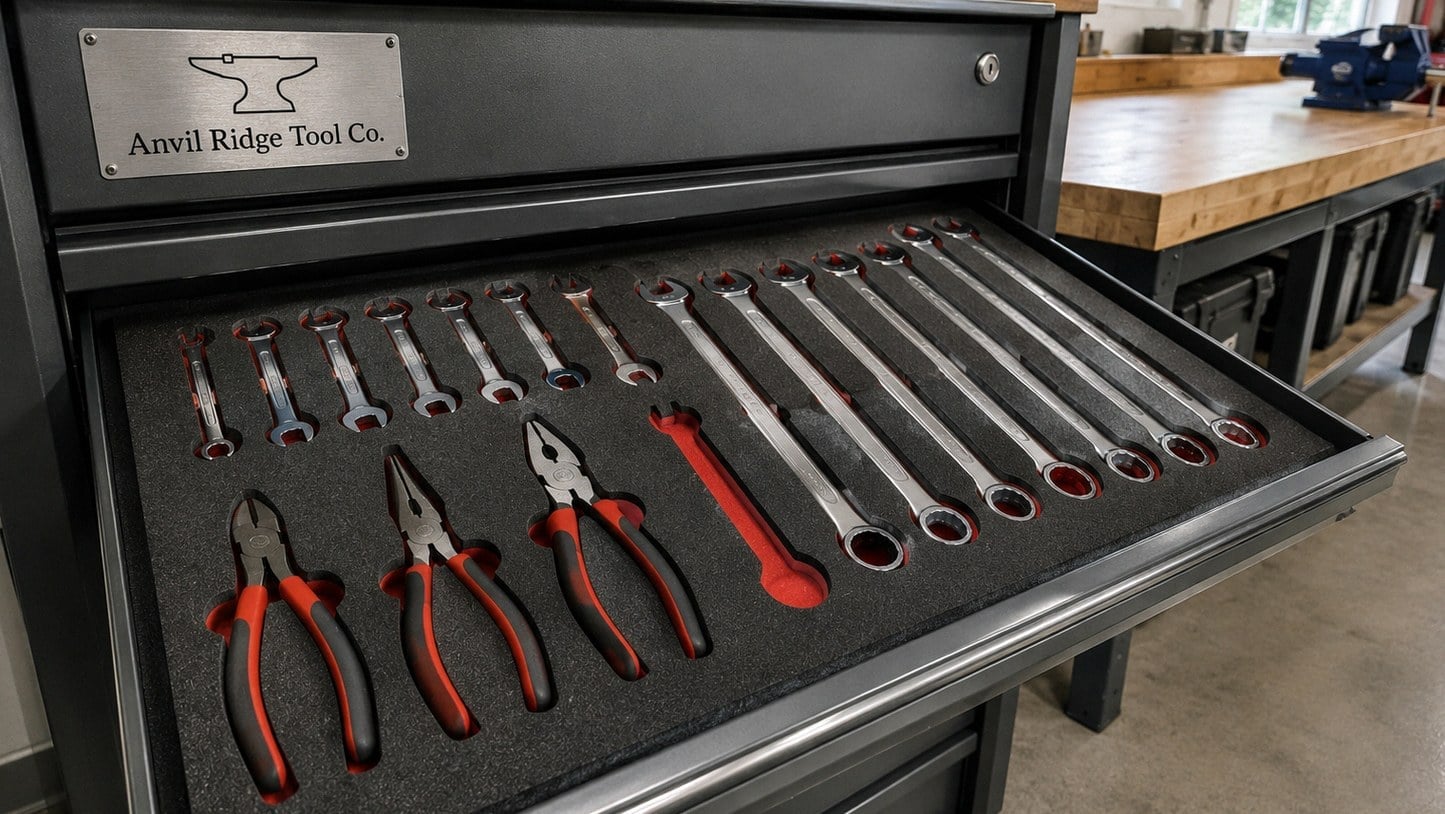
Count foam inserts by container, not by tool. Every hard case, tool drawer, presentation box or shadow board position that needs a cutout gets its own insert, and a single case with a lid and a base usually needs two pieces of foam: a cut base layer and a softer lid layer that holds the tools down.
Walk the floor or the warehouse with a simple list before you request a quote. Write down each container model, how many of that model you run, and whether the tool set inside is identical from unit to unit. Identical kits share one layout, which keeps the order simple. Kits that differ even slightly, such as a technician who carries an extra meter, need their own layout or a shared layout with an empty spare pocket.
- Cases: one base insert per case, plus a lid insert if the lid needs to press tools in place.
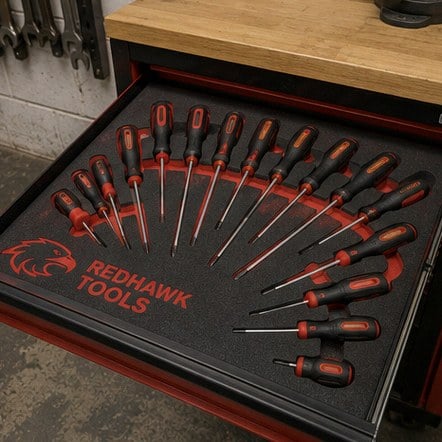
- Drawers: one insert per drawer, counted per toolbox, not per cabinet.
- Multi-layer kits: count each layer as its own piece of foam.
- Packaging: count units shipped over the period you want covered, not units on the shelf.
How many spare foam inserts should I add to the order?
Add spare foam inserts for anything that will realistically be lost, damaged or added before your next reorder. Foam that rides in a service van, sits in a dusty shop or gets opened dozens of times a shift wears faster than foam that lives in a display box, so the spare count follows how hard the kits are used.
Think about three sources of demand beyond today’s count. First, wear: corners and finger pulls on heavily used drawers tear over time. Second, damage: a dropped case, a solvent spill or a crushed lid can ruin one insert without hurting the rest. Third, growth: a new hire, a new truck or a second shift creates a new kit that should match the existing ones exactly.
A few spares cost far less in downtime than a technician working out of a loose bag while a replacement is cut. Spares also let you swap a torn insert on the spot, which keeps a shadow board or drawer audit-ready instead of showing an empty gap.
What is the smallest order that makes sense for a small team?
The smallest order at Customized Foam Inserts is 12 foam inserts, which suits a small field crew, a single lab, or a pilot run of a new product box. Twelve pieces is enough to outfit a handful of cases with lid layers and still keep a couple of spares on the shelf.
If you need fewer kits than that today, use the extra pieces deliberately rather than leaving them in a corner. Common ways to fill out a first run include:
- Lid layers for every case, so tools stay seated during transport.
- Spare base inserts for the cases that travel the most.
- A test insert for a second case model you plan to add next quarter.
- Display or presentation box foam for a sales sample alongside the working kits.
Mixing a working kit with a presentation piece works best when both use the same layout family, so check with the team during the mockup stage. Because the mockup arrives within 24 hours and revisions are free, you can try the layout on the first case before committing to how the rest of the run is split.
Should I order all my case foam at once or in stages?
Order foam inserts in stages when the tool set or the case model is still changing, and order everything at once when the kit is settled. A staged approach protects you from cutting a full fleet of foam around a layout that changes the moment a new tool is issued.
A practical pattern is a pilot run first. Cut the minimum for one crew or one line, let the people who use the kits work with them for a few weeks, and collect feedback on pocket depth, finger pulls and tool order. Then approve a revised layout and roll it out across the rest of the fleet.
| Situation | Better approach | Why |
|---|---|---|
| New tool kit, layout untested | Pilot run, then fleet order | Users find fit issues before every case is cut |
| Established kit, same case model everywhere | Single full order | One approval, one production run, consistent foam |
| Fleet growing month to month | Initial order plus scheduled reorders | Saved layout keeps new kits identical |
| Product packaging for a launch | Launch quantity plus a reorder trigger | Matches inserts to real sales instead of forecasts |
How do I plan foam inserts for different case models in one order?
Plan mixed fleets by grouping foam inserts by case model and kit contents, then treat each group as its own layout. A company running two hard case brands and one tool chest has at least three layouts, even if the tools inside overlap.
For each group, list the case model, interior depth, the tools or products it holds, and the quantity. Customized Foam Inserts can match foam to the case brand and depth, so accurate case details matter more than guessing a size. The guide on hard case foam inserts and the page on tool drawer foam organizers show the main formats side by side.
- Group containers by model and depth.
- Within each group, confirm the kit contents are identical.
- Split any group where the contents differ into its own layout.
- Assign a quantity, including spares, to each layout.
- Send the grouped list with the quote request so every layout is mocked up together.
Grouping this way also makes reorders easy, because each layout has a clear name and a known quantity that you can repeat.
What should I plan for when ordering packaging foam inserts?
Packaging foam inserts are planned around shipments, not containers, so the quantity follows how many products you expect to ship before the next reorder. A presentation box or shipper that holds a product needs a fresh insert every time a unit leaves the building.
Start with a realistic shipping estimate for the period you want covered and add a buffer for damaged or rejected boxes during packing. Brands that launch a new product often order a first run sized to the launch, then reorder once real sales data replaces the forecast. That avoids storing piles of foam for a product that sells slower than planned, and it avoids running out when a product sells faster.
See the pages on packaging foam inserts and presentation box foam for format options. Keep the approved layout on file so a reorder matches the original packaging exactly, which matters when the unboxing experience is part of the brand.
How far ahead should I reorder foam inserts so kits never go without?
Reorder foam inserts while you still have spares on the shelf, not after the last one is used. With standard turnaround at about 2 weeks, set a reorder point that leaves enough spares to cover any losses during that window, and use express shipping when the gap is tighter.
Simple habits keep reorders painless:
- Name every approved layout and note which case or drawer it fits.
- Keep a short count of spares by layout, updated when one is used.
- Trigger a reorder when spares for a layout drop to the level you decided on.
- Bundle reorders for several layouts into one request when timing allows.
Because Customized Foam Inserts keeps approved layouts, a reorder does not restart the design process. You confirm the layout and quantity, and production can begin. If a tool has changed since the last run, request a revised mockup first, which still arrives within 24 hours.
What information should I send so the quote matches my real quantity?
Send the grouped list of containers, the quantity for each layout including spares, and any timing constraint, so the quote for your foam inserts reflects the real job. Quotes built on a vague total usually change once layouts are counted, which slows everything down.
A complete request includes the case or drawer make and model, interior depth if known, a photo or list of the tools or products, the quantity per layout, and the date the kits are needed. The page on how it works explains each step from request to delivery, and the custom quote form collects these details in one place.
You pay nothing until you approve the design, so it is safe to send a detailed request early and refine quantities after the mockup.
Frequently asked questions
Do I need a separate foam insert for the lid of every case?
A lid foam insert is worth ordering for any case that travels, because it presses tools down into their pockets so they do not shift or rattle. Cases that stay on a bench or shelf can often skip the lid layer. Count lid pieces separately from base pieces when you total the order, since each one is its own piece of foam.
Can one order include foam inserts for several different case models?
Foam inserts for several case models can go on one order at Customized Foam Inserts, with each model treated as its own layout. Send the make, model and quantity for each group so every layout is mocked up together. The minimum of 12 applies to the order, so mixing a few layouts in one run is a practical way to outfit a varied fleet.
How do I handle a technician who carries extra tools in the same case model?
Foam inserts for a technician with extra tools can either use a separate layout or a shared layout with a spare pocket. A separate layout gives every tool a tight cutout, while a spare pocket keeps one design across the fleet. Decide based on how many technicians carry the extra tools and whether the extra kit is likely to stay permanent.
What happens to my layout files after the first order ships?
Foam insert layouts approved at Customized Foam Inserts are kept on file, so a later reorder can repeat the exact same design without starting over. Name each layout by case model or kit so reordering is quick. If a tool changes between runs, ask for a revised mockup, which still arrives within 24 hours with unlimited free revisions.
Is a pilot run worth it before outfitting a full fleet of cases?
A pilot run of foam inserts is worth it when the tool kit or case model is new. Users catch issues with pocket depth, finger pulls and tool order before every case is cut. Once the layout is settled, the full fleet can be ordered from the revised design, which keeps every kit consistent and avoids replacing foam that never fit well.
How do I estimate spares for drawers that are opened all day?
Spare foam inserts for high-use drawers should reflect how quickly corners and finger pulls wear in your shop. Look at how often existing foam has been replaced, then cover that pace until the next planned reorder. Heavily used tool drawer foam usually deserves more spares than presentation or storage foam that is rarely handled.
Should packaging foam be ordered to forecast or to confirmed sales?
Packaging foam inserts are safest ordered to a realistic launch quantity first, then reordered once real sales replace the forecast. Ordering everything to an optimistic forecast leaves foam in storage if sales are slower, while ordering too little risks running out during a busy period. Keeping the approved layout on file makes the follow-up run match the original boxes.
Can I add more foam inserts to an order after approving the mockup?
Foam insert quantities can usually be adjusted before production starts, so contact Customized Foam Inserts as soon as you know the count has changed. Once the run is cutting, extra pieces are best handled as a quick reorder from the saved layout. Confirming quantities at the mockup stage avoids delays and keeps the original turnaround on track.
What is the best way to track spare foam inserts in a busy shop?
Spare foam inserts are easiest to track with a short list by layout name, showing how many spares remain and where they are stored. Update the count when a spare is used and set a reorder point for each layout. Storing spares flat and clean, away from solvents and sharp tools, keeps them ready to drop in.
Do shadow boards and drawer foam need to be ordered together?
Shadow boards and drawer foam inserts do not need to be ordered together, but combining them helps when a workplace organization project covers both. One request at Customized Foam Inserts lets the layouts share colors and labeling so the workspace looks consistent. If budgets are split, order the area that sees the most use first and add the rest later.
How does a growing team keep new kits identical to the originals?
Foam inserts for new kits stay identical when every reorder uses the approved layout on file and the same case model as the originals. Record the layout name with each kit and check whether any tools have changed before reordering. If they have, approve a revised mockup first so new and existing kits stay interchangeable across the team.
Get a free mockup for your foam inserts
Send your logo or idea and the quantity you have in mind. Customized Foam Inserts returns a free mockup within 24 hours, you approve the design before anything is produced, and standard turnaround is about two weeks with faster options available. Get a custom quote.